Platosphere is an icosahedron—one of the five Platonic solids—a highly symmetric, convex form composed of 20 equilateral triangular faces, 30 edges, and 12 vertices. It is often described as the “roundest” of the Platonic solids, closely approximating a sphere, and in Plato’s philosophy it is traditionally associated with the element of water. This twenty-sided polyhedron has been a focus of geometric inquiry since its conception in 4th-century BCE Greece.
Plato (428–347 BCE), the Athenian philosopher and founder of academic philosophy, is widely regarded as a foundational thinker of Western thought. The axis mundi of Plato’s world was the Acropolis, whose symbolic center was the Sanctuary of Athena Nike, constructed between 449 and 420 BCE. The sanctuary’s high priestess is often cited as one of the earliest democratically selected civic officials in history. During this era of Greek Enlightenment, Plato hypothesized in his dialogue Timaeus (circa 360 BCE)—a discussion attributed to Timaeus of Locri—that the universe is composed of five fundamental elements: earth, air, fire, water, and the cosmos.
Plato’s great conceptual leap, though not scientifically accurate, was to propose that these elements were composed of microscopic geometries—what we now call the Platonic solids: the cube, tetrahedron, octahedron, icosahedron, and dodecahedron. These regular forms can be seen as one of humanity’s earliest attempts to describe the atomic nature of reality through geometry.
Among these forms, the icosahedron stands apart with the distinction of being considered one of the first geometric structures derived purely from human abstraction rather than direct observation of nature. Though it was intended to represent a sphere, the mathematical constant π was only approximated as 3.15 by Babylonian and early Chinese mathematicians and was not rigorously defined as an infinite constant until the early 18th century—some 2,300 years later. Lacking this precision, Plato derived the icosahedron through proportion rather than curvature.
He began with three identical golden rectangles, each defined by the golden ratio. Two were rotated—one along its long axis and one along its short—while the third remained unrotated. These three rectangles intersect at their centers, forming twelve vertices at their corners. When these vertices are connected, twenty equilateral triangles emerge, creating the icosahedron. The three intersecting rectangles are known as the golden planes.
Platosphere is a construction of these golden planes, fabricated from transparent glass or acrylic combined with dichroic film. A continuous, single strand of stainless-steel aircraft cable traces the surface geometry of the icosahedron, defining its twenty equilateral triangular faces before extending upward along a vertical axis to suspend the entire tensegrity structure. The result is a weather vane or sun catcher that rotates freely in the slightest airflow or thermodynamic disturbance.
In this way, the piece becomes a hybrid of classical geometry and 21st-century four-dimensional art. Popularized by Alexander Calder and defined by Marcel Duchamp, the mobile is an art form that expresses motion driven by imperceptible airflow—often under six feet per second—and beyond. It is a structure that achieves stability through extreme delicacy, allowing for a maximum number of degrees of freedom in movement.
Platosphere reflects light and imagery across three Cartesian planes while simultaneously allowing light to pass through it, refracting and diffracting into a mesmerizing dance of constrained complexity. It functions as a suspended, stained-glass object freely spinning in space.
In short, Platosphere is a helio-dynamic hue generator and mirrored reflector that operates architecturally by projecting light throughout any space within its line of sight. It functions along a polar axis, producing direct reflections at 45-degree angles and indirect reflections across a full 360 degrees. As the observer shifts position, the perceived colors continuously change. This hyper-dynamic display is most vivid in direct sunlight but remains active across all light levels—even in darkness.
The sculpture captures attention whether viewed by a newborn or a great-grandparent. It can be especially magical for infants and new parents, as young children become transfixed by its color and geometry, offering caregivers moments of quiet respite. Architecturally, it draws light through shadowed windows, animates interior spaces, and fosters shared diurnal experiences—often extending beyond a single home to engage an entire neighborhood in a collective relationship with light, movement, and time.
Platosphere is an icosahedron—one of the five Platonic solids—a highly symmetric, convex form composed of 20 equilateral triangular faces, 30 edges, and 12 vertices. It is often described as the “roundest” of the Platonic solids, closely approximating a sphere, and in Plato’s philosophy it is traditionally associated with the element of water. This twenty-sided polyhedron has been a focus of geometric inquiry since its conception in 4th-century BCE Greece.
Plato (428–347 BCE), the Athenian philosopher and founder of academic philosophy, is widely regarded as a foundational thinker of Western thought. The axis mundi of Plato’s world was the Acropolis, whose symbolic center was the Sanctuary of Athena Nike, constructed between 449 and 420 BCE. The sanctuary’s high priestess is often cited as one of the earliest democratically selected civic officials in history. During this era of Greek Enlightenment, Plato hypothesized in his dialogue Timaeus (circa 360 BCE)—a discussion attributed to Timaeus of Locri—that the universe is composed of five fundamental elements: earth, air, fire, water, and the cosmos.
Plato’s great conceptual leap, though not scientifically accurate, was to propose that these elements were composed of microscopic geometries—what we now call the Platonic solids: the cube, tetrahedron, octahedron, icosahedron, and dodecahedron. These regular forms can be seen as one of humanity’s earliest attempts to describe the atomic nature of reality through geometry.
Among these forms, the icosahedron stands apart with the distinction of being considered one of the first geometric structures derived purely from human abstraction rather than direct observation of nature. Though it was intended to represent a sphere, the mathematical constant π was only approximated as 3.15 by Babylonian and early Chinese mathematicians and was not rigorously defined as an infinite constant until the early 18th century—some 2,300 years later. Lacking this precision, Plato derived the icosahedron through proportion rather than curvature.
He began with three identical golden rectangles, each defined by the golden ratio. Two were rotated—one along its long axis and one along its short—while the third remained unrotated. These three rectangles intersect at their centers, forming twelve vertices at their corners. When these vertices are connected, twenty equilateral triangles emerge, creating the icosahedron. The three intersecting rectangles are known as the golden planes.
Platosphere is a construction of these golden planes, fabricated from transparent glass or acrylic combined with dichroic film. A continuous, single strand of stainless-steel aircraft cable traces the surface geometry of the icosahedron, defining its twenty equilateral triangular faces before extending upward along a vertical axis to suspend the entire tensegrity structure. The result is a weather vane or sun catcher that rotates freely in the slightest airflow or thermodynamic disturbance.
In this way, the piece becomes a hybrid of classical geometry and 21st-century four-dimensional art. Popularized by Alexander Calder and defined by Marcel Duchamp, the mobile is an art form that expresses motion driven by imperceptible airflow—often under six feet per second—and beyond. It is a structure that achieves stability through extreme delicacy, allowing for a maximum number of degrees of freedom in movement.
Platosphere reflects light and imagery across three Cartesian planes while simultaneously allowing light to pass through it, refracting and diffracting into a mesmerizing dance of constrained complexity. It functions as a suspended, stained-glass object freely spinning in space.
In short, Platosphere is a helio-dynamic hue generator and mirrored reflector that operates architecturally by projecting light throughout any space within its line of sight. It functions along a polar axis, producing direct reflections at 45-degree angles and indirect reflections across a full 360 degrees. As the observer shifts position, the perceived colors continuously change. This hyper-dynamic display is most vivid in direct sunlight but remains active across all light levels—even in darkness.
The sculpture captures attention whether viewed by a newborn or a great-grandparent. It can be especially magical for infants and new parents, as young children become transfixed by its color and geometry, offering caregivers moments of quiet respite. Architecturally, it draws light through shadowed windows, animates interior spaces, and fosters shared diurnal experiences—often extending beyond a single home to engage an entire neighborhood in a collective relationship with light, movement, and time.
 Image 1 of 8
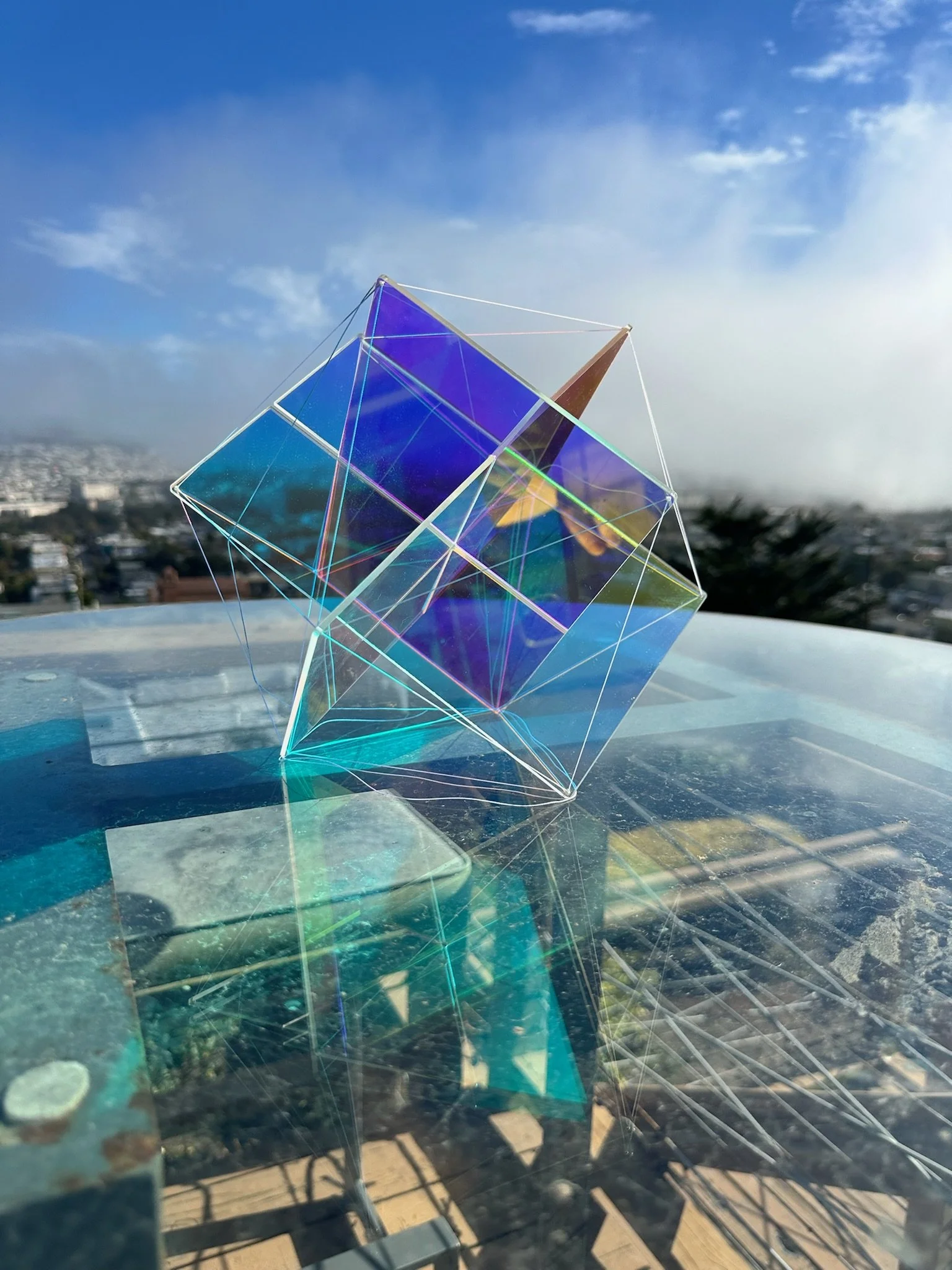 Image 2 of 8
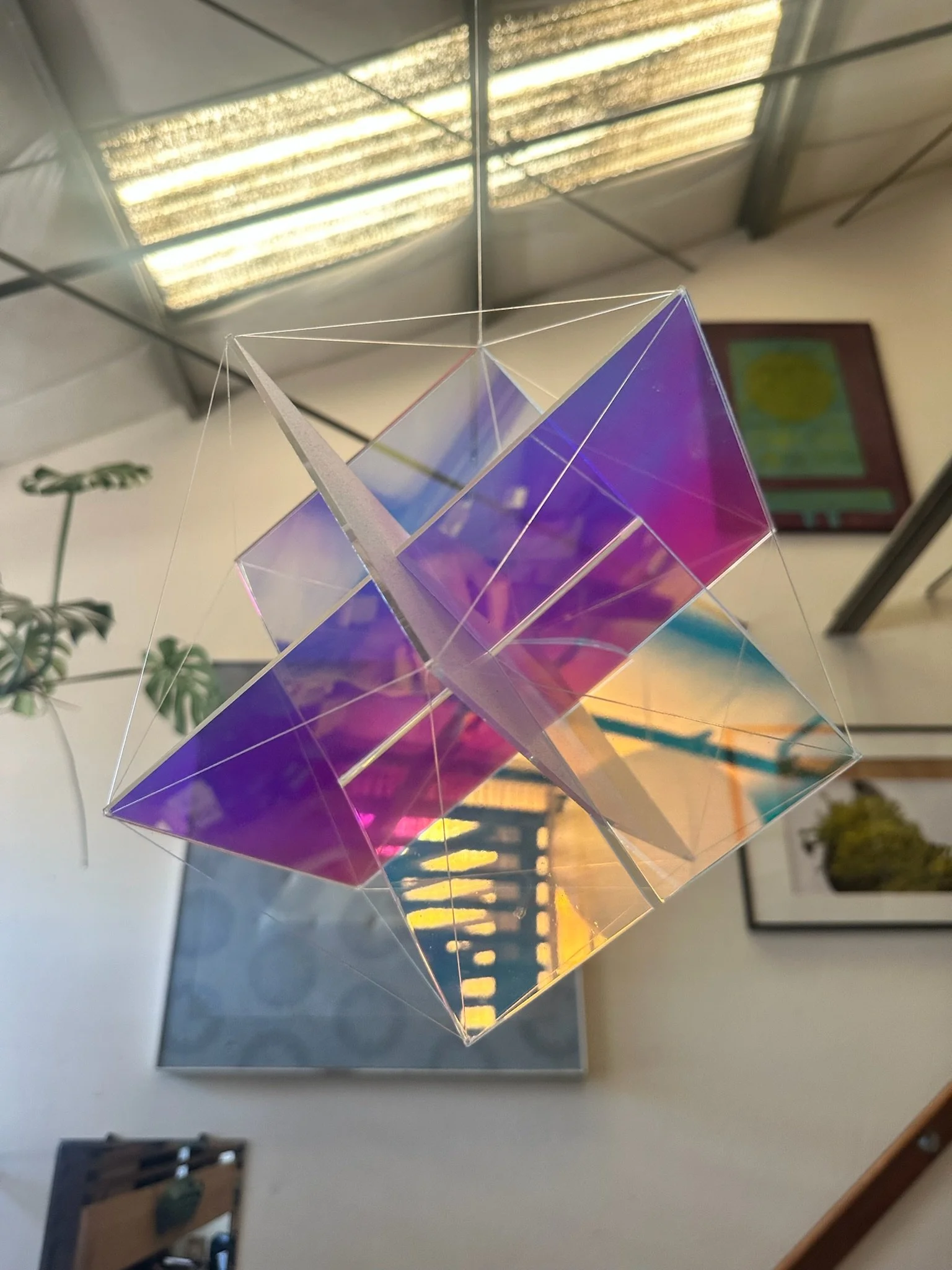 Image 3 of 8
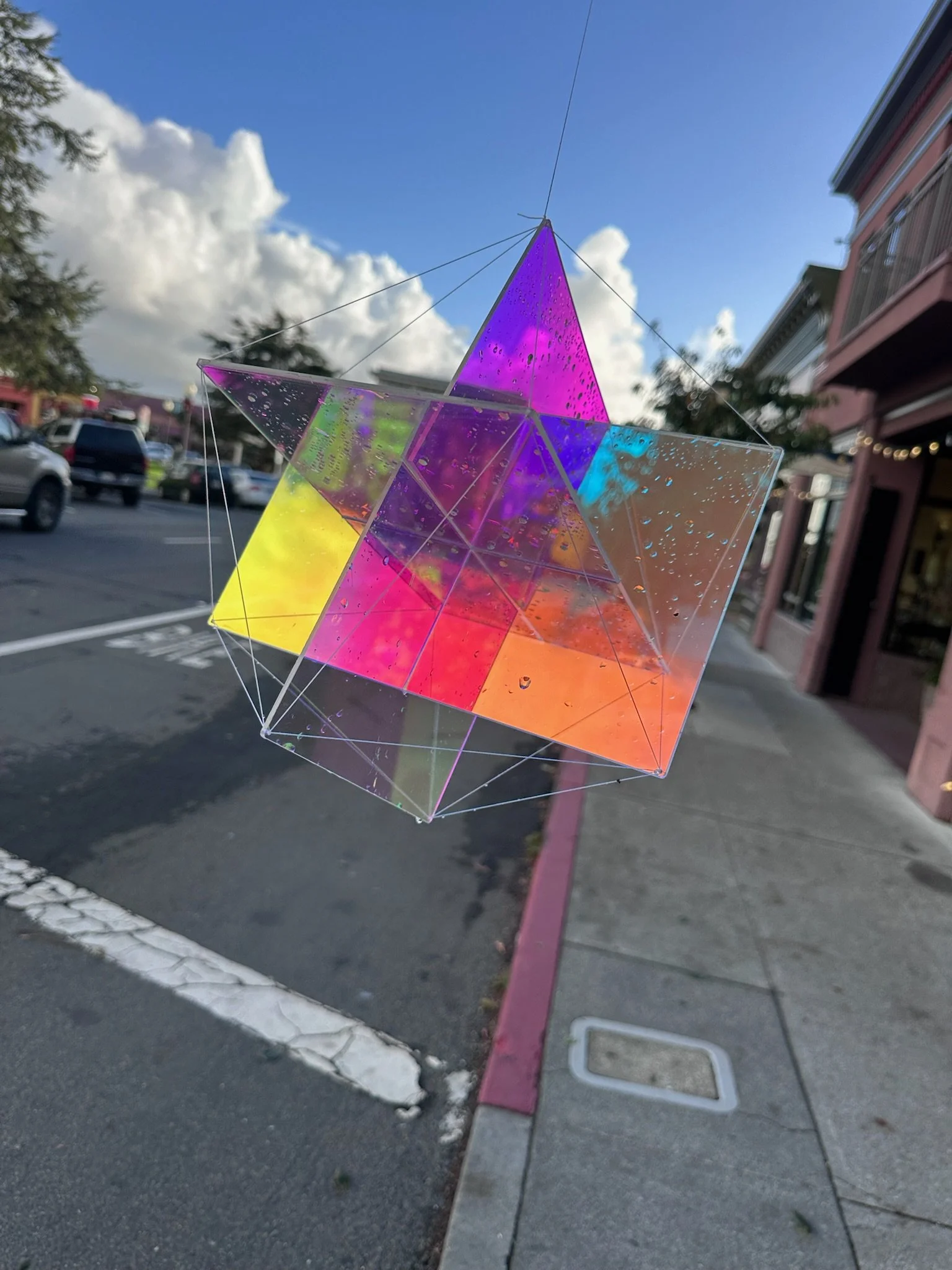 Image 4 of 8
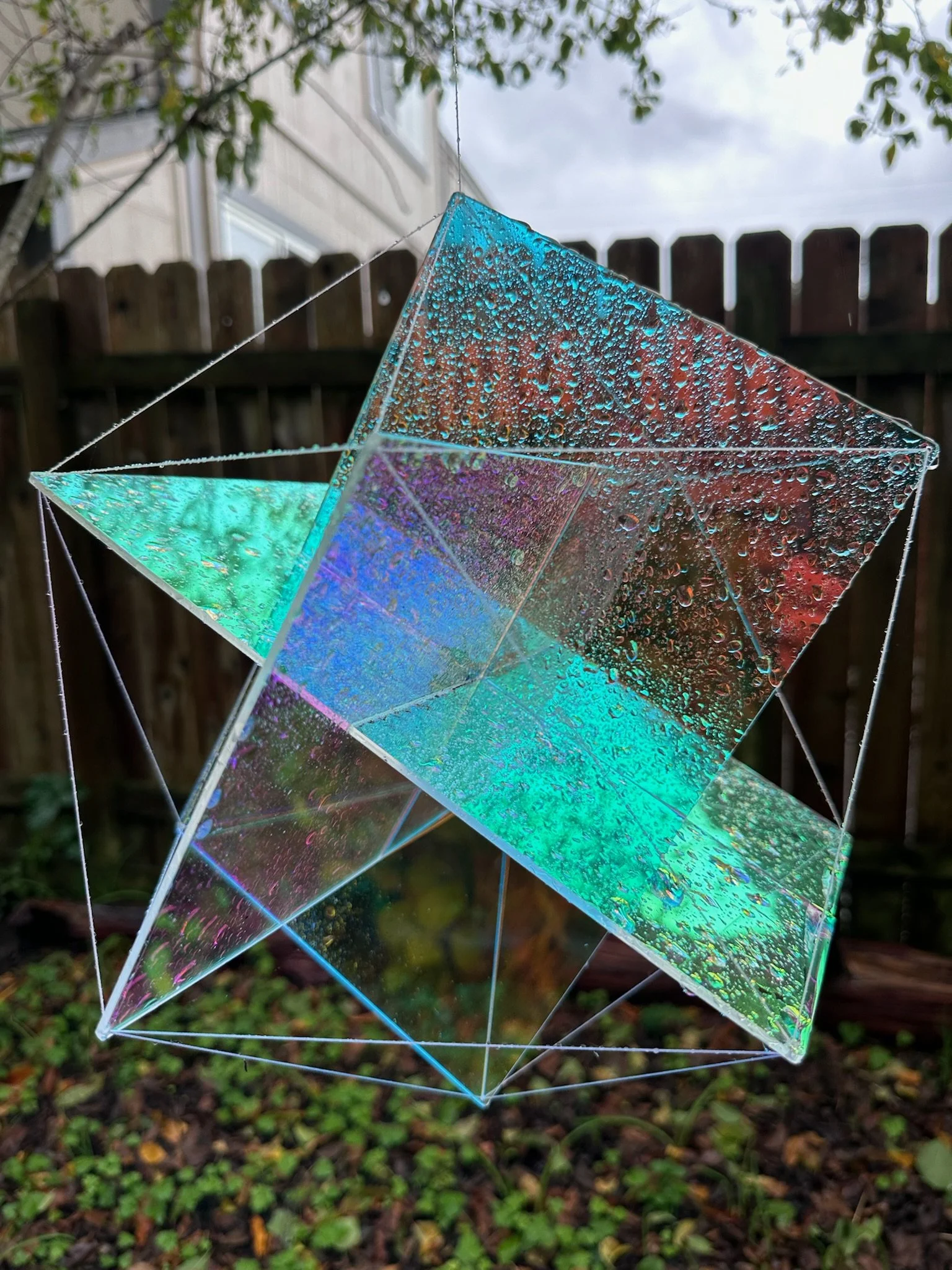 Image 5 of 8
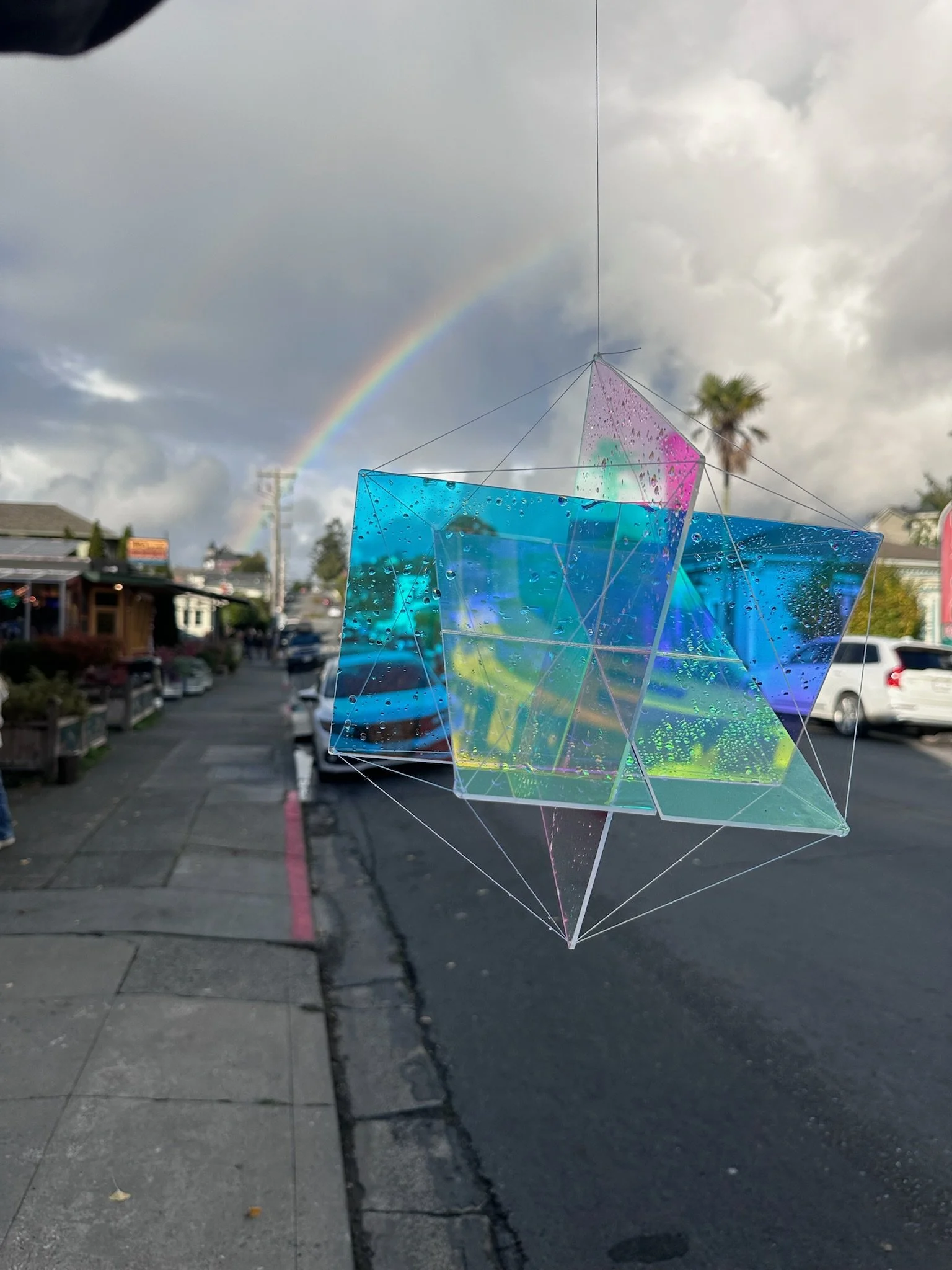 Image 6 of 8
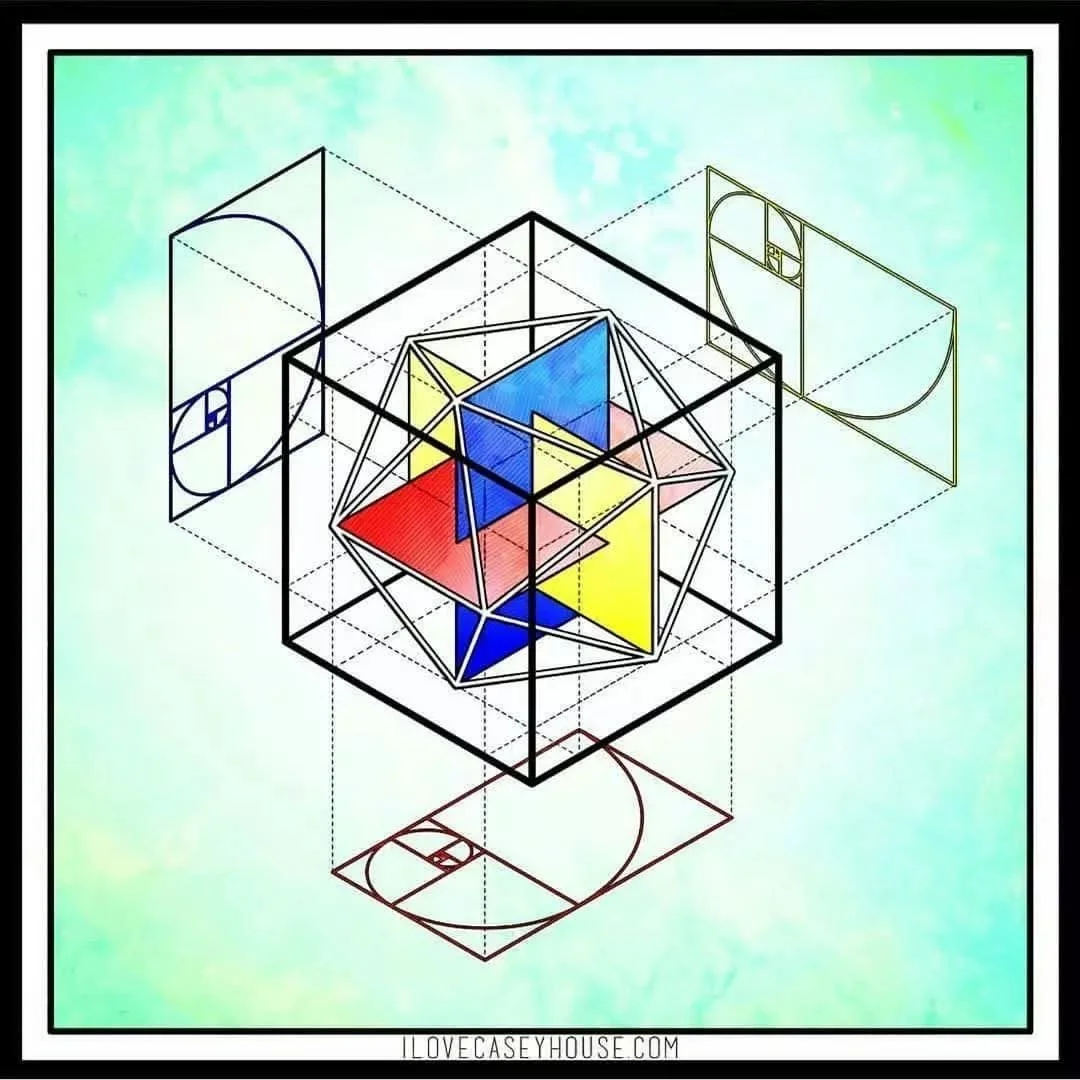 Image 7 of 8
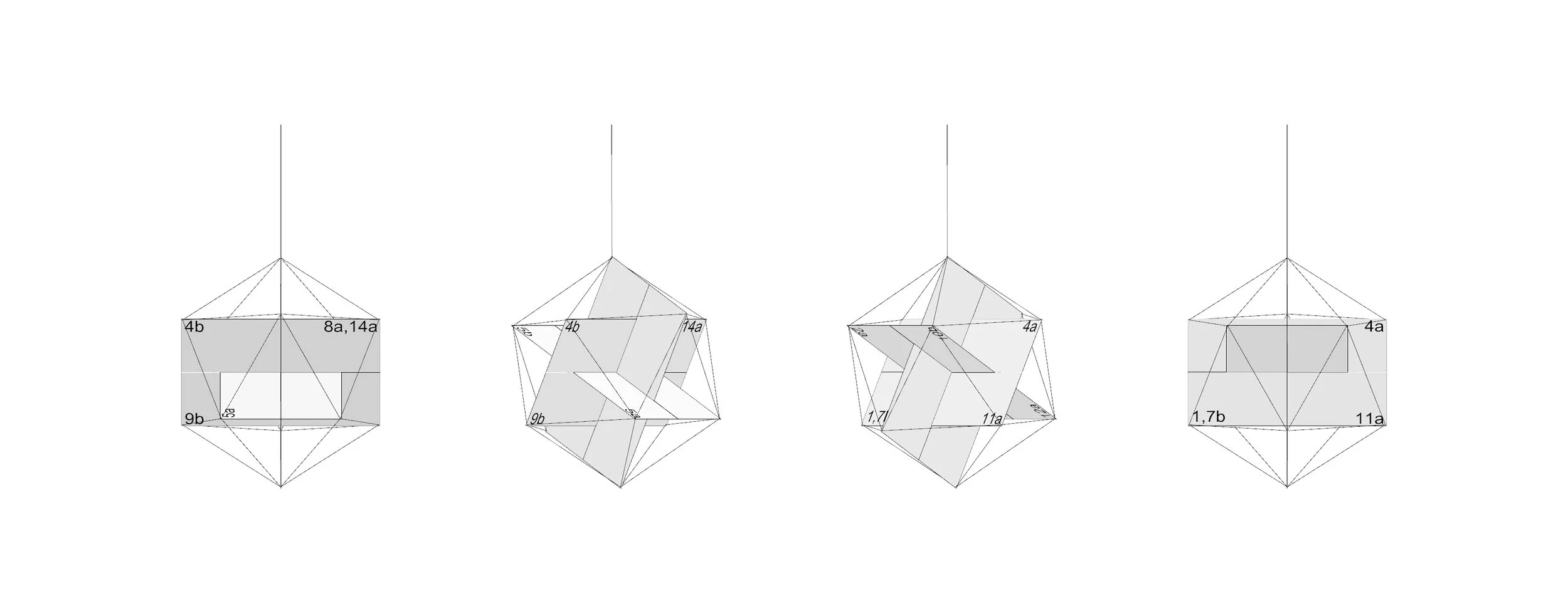 Image 8 of 8